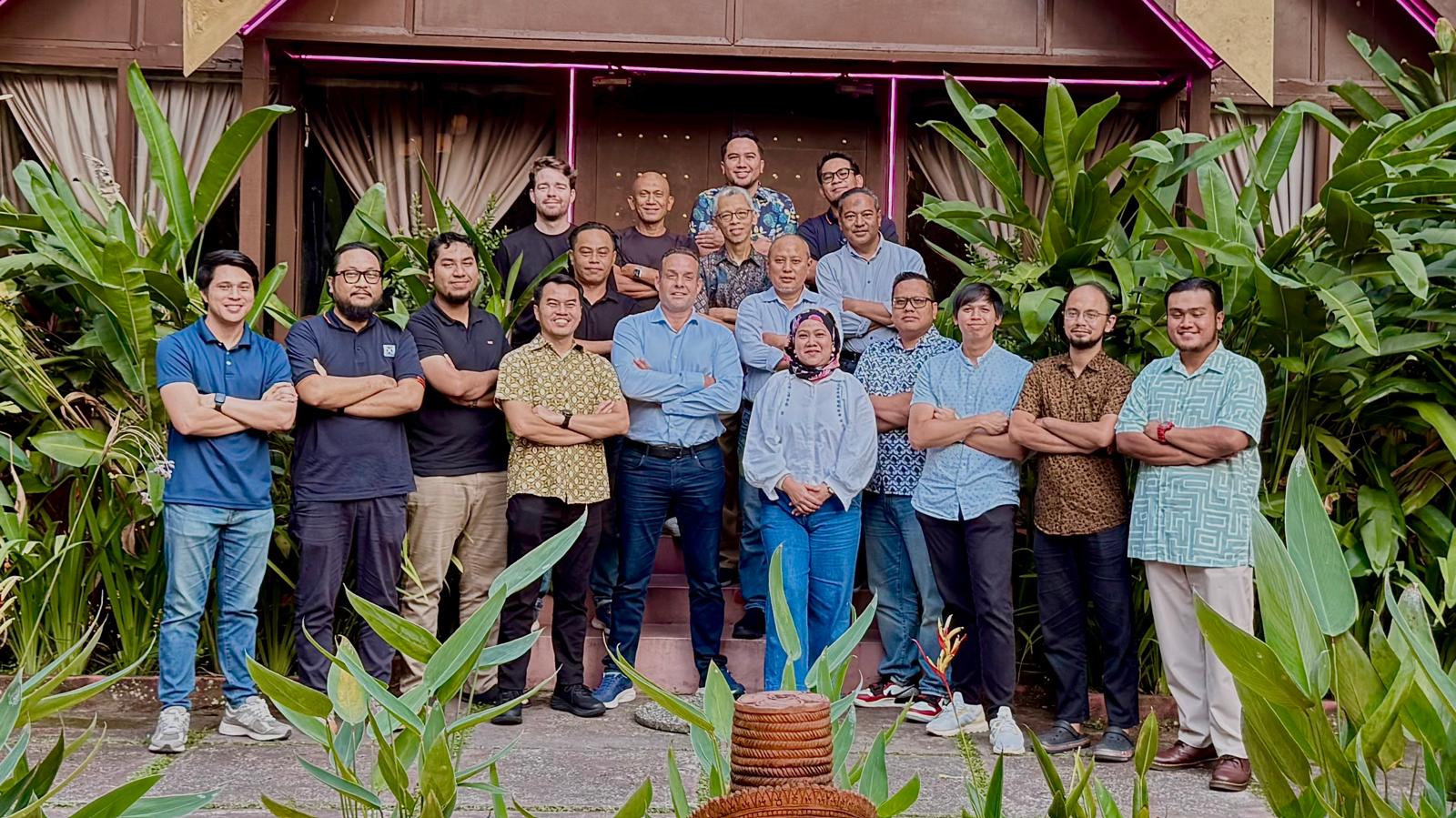

Marine Masters Malaysia: Meet the core team behind the next phase
Marine Masters Malaysia is entering its next phase. After gaining traction in the region, we are now preparing for a new multi-year large-scale decommissioning project. The details will follow at a later stage, but the direction is already clear. We are building the local organisation needed to support larger and longer-running projects in Malaysia.
This next step is about making sure we have the right people, structure and rhythm in place to carry that work properly. It means creating a team that can handle complex projects, understand the local market and work with clients, partners and subcontractors in a practical, creative, transparent and disciplined way.
Our ambition is to build a solid Malaysian subsidiary that can operate more independently from the Netherlands, manage multiple projects at the same time and keep the same can-do mentality that shaped Marine Masters from the beginning. At the centre of that development is our core team in Malaysia: Azim, Julia, Hamdi and Fadzil.
Together, they bring project leadership, organisational structure, cost control and HSE discipline. More importantly, they represent what the next phase in Malaysia is all about.
From traction to organisation
The decommissioning of the South Angsi Alpha platform showed what we can bring to the region, combining offshore contracting experience, a salvage mindset, creative engineering, transparent cooperation and cost-efficient execution. It also strengthened our belief that Malaysia is a market where Marine Masters can build something for the long term.
The next step is different. It is not only about preparing another project, but about creating the structure needed to carry the work. A major decommissioning campaign requires a professional and versatile team, bringing together project management, engineering, operations, HSE, quality, logistics and cost control before the first offshore activity begins. That is why the Malaysian team has grown quickly, with every new role adding something the organisation needs for the next phase.
A recent dinner brought all 22 colleagues from the Malaysian team together. It was a personal moment in the wider preparation, but an important one. In offshore work, people need to know each other before they can rely on each other under pressure.
Azim: project leadership
As Project Manager, Azim brings the operational backbone to the team. He was involved in the South Angsi Alpha Decommissioning project on the client side and has seen our way of working from close range, with practical methods coming first instead of automatically choosing the biggest or most obvious asset.
“What stood out to me was the flexibility,” says Azim. “Marine Masters looks at the problem first and then finds the most practical solution. Sometimes that means a simpler method, a different asset or a more economical way of doing the work, but the focus always remains on doing it safely and properly.”
That flexibility matters in decommissioning, where the reality offshore is not always the same as the information on paper. “In decommissioning, you cannot work from assumptions,” he says. “No two platforms are exactly the same, documentation can be incomplete, and site conditions can differ from the drawings. You need to verify what is really there and then build the right method around that.”
Azim’s role is to keep that complexity moving. In Malaysia, that means dealing with specific client requirements, permits, logistics, subcontractors, equipment movements, client requirements and the practical realities of working across different regions and states. It also means bringing the right people into the conversation early, so that issues can be solved within the team before they become bigger.
Julia: people and structure
Julia brings the people side of the organisation together. In a fast-growing team, HR is not a back-office function. It is part of operational readiness, because work can only move quickly when the right people are in place, roles are clear and expectations are understood from the start.
Marine Masters Malaysia is scaling up, and that requires more than recruitment. It means selecting people with the right qualifications, attitude and ability to work within our culture. It also means making sure qualified crew members are recruited, mobilised and deployed in line with project requirements and client standards.
Julia’s role covers the details that make this possible, from documentation, certifications, travel arrangements and work permits to the coordination of offshore personnel and vessel mobilisation schedules. It is practical, detailed work that helps ensure the right people are in the right place at the right time.
“We are not only filling positions for one project,” says Julia. “We are building a team that can continue, grow and support future campaigns. That means we need the right skills, but also the right values, communication and trust.”
The Malaysian organisation combines local knowledge with the practical offshore experience Marine Masters has built over the years. For Julia, the strength is not only in that mix, but in how people work together. “The important thing is to make it work as one team,” she says. “That means shared standards, clear communication and trust between people.”
Julia says that same idea also applied to the recent team dinner. “When a team grows quickly, people also need time to connect. A dinner like that may seem simple, but it helps people get to know each other outside the pressure of meetings, planning and mobilisation.”
Hamdi: cost control
Hamdi brings financial discipline and strong field experience to the core team. In large offshore projects, cost control is not simply tracking numbers after decisions have been made. It is part of making the right decisions before the work starts. He started his career as a Project Engineer and has worked across the full project management cycle, from contract administration and engineering to procurement, logistics and site execution. That experience helps him understand how decisions on paper translate into reality offshore.
“Cost control starts with understanding the project technical and contractual requirement, budget, the risks and the reality of the work,” says Hamdi. “You need to know what the project can carry, but you also need to understand what happens offshore. If you only look at the numbers from behind a desk, you miss things.”
For Marine Masters, cost-efficient execution is a core principle. That does not mean choosing the cheapest option, but choosing the method that delivers the best value without compromising safety, quality or delivery. “Cost-efficient is not the same as cheap,” he says. “Cheap can create problems later. Cost-efficient means choosing the smartest solution after looking at the risks, the schedule, the assets and the long-term impact on the project.”
That is why scenario planning is central to his role. Different approaches may look attractive on paper, but only become useful when the team understands the full cost, risk and schedule impact.
“You have to compare different scenarios before you commit,” Hamdi says. “Sometimes a larger asset can reduce time offshore. Sometimes a smaller or more locally available asset is the better solution. The point is to understand the complete picture before making the decision.”
Fadzil: HSE discipline
Fadzil leads the HSE side of the team. With long experience in oil and gas and decommissioning, he brings calm, structure and discipline to a work environment where preparation is critical. “For me, safety starts before anyone goes offshore,” says Fadzil. “You first need to understand the hazards, set the baseline and make sure every person knows what they are dealing with before the work begins.”
Decommissioning carries specific risks: stored energy, hazardous materials, structural uncertainty, confined spaces, lifting operations and complex interfaces between different teams. That is why preparation needs to be practical, detailed and shared by everyone involved.
“Safety is not only procedures,” he says. “Procedures are important, but the real culture is visible in behaviour. People must understand the risks, speak up when something is wrong and feel responsible for each other.” That approach requires more than documentation. It calls for risk workshops, permit-to-work systems, isolation procedures, emergency response planning, equipment checks, toolbox talks and clear communication between all parties involved.
“Before mobilisation, we need to remove as many surprises as possible,” Fadzil says. “Once we go offshore, everyone needs to follow the same safety language, stay sharp and understand that Stop Work Authority is a real responsibility.” In the end, his measure of success is simple: everyone must return home safely.
Don’t outlocal the local
Marine Masters does not enter a region by overlooking local knowledge. We work with local subcontractors, suppliers and specialists because they understand the environment, the regulations, the available assets and the working culture.
That local knowledge improves execution and supports more cost-efficient sourcing of assets, equipment and services. If the right capability is available locally, it should be part of the solution, not only because it can reduce cost, but because it often makes the project stronger.
This fits the Marine Masters way of working. We do not overcomplicate the project, bring in unnecessary heavy assets or ignore what is already available in the market. We look at what the project actually requires, then build the right team, methods and asset base around it.
Ready for the next phase
Marine Masters Malaysia is becoming a local organisation with its own structure, rhythm and core team. The next multi-year project will ask a lot from that team, and the preparation is already moving at pace. Project management, team structure, cost control and HSE are being built into the foundation from the start, because that is what large-scale decommissioning work requires.
In the end, it comes back to the same way of working: prepare properly, stay practical, think creatively, keep control and make sure the job gets done safely. That is how Marine Masters Malaysia is stepping up.