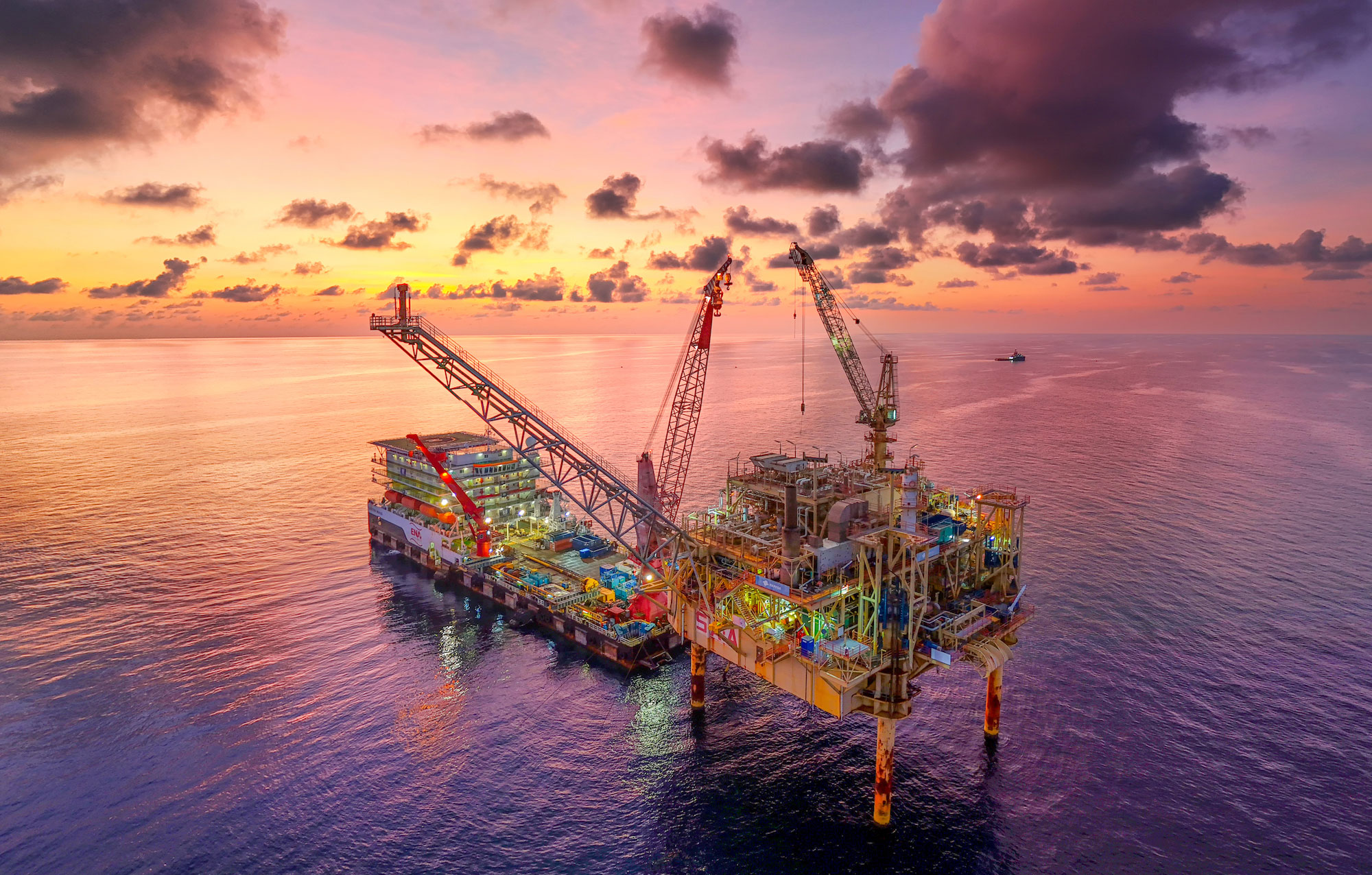

South Angsi Alpha: a different decommissioning approach in Malaysia
The South Angsi Alpha decommissioning became an important milestone in the development of MarineMasters in Malaysia. The platform had served as a full production facility for more than 15 years. After production had stopped, the topside and substructure had to be removed safely, with part of the structure repurposed as a rig-to-reef marine habitat.
For MarineMasters, the project brought together many of the things that define us. Technical preparation, practical offshore execution, transparent cooperation with local parties, and the ability to find a cost-efficient solution without compromising safety or quality.
The South Angsi Alpha platform was a 4,000 mt four-legged Mobile Offshore Application Barge. It became the largest platform ever to be decommissioned and repurposed within Malaysian waters, and the campaign stands as the largest decommissioning and reefing operation of its kind in the country.
Reverse installation method
MarineMasters was responsible for the removal of the MOAB using a reversed installation method, as well as the removal of various associated components for safe onshore disposal. The scope included the recovery of all 13 conductors, the retrieval of four MOAB support legs, and the cutting and transport of the Wellhead Access Platform.
Piece by piece, the platform was separated, recovered, transported or prepared for reefing. The jacket was cut at -55 metres LAT and vertically separated, allowing the sections to be laid on the seabed as artificial reef structures. What started as a complex offshore removal campaign became part of Malaysia’s largest rig-to-reef project.
The project was not about bringing in the biggest possible assets. It was about engineering the right method for the job.
MarineMasters used multiple techniques and developed special procedures to execute the scope safely and efficiently. The work included ROV-assisted underwater cutting, high-speed PVL hand cutting by divers, efficient personnel transfer between the work barge and the MOAB, and custom-designed lifting systems. These methods helped avoid the use of expensive heavy-lift vessels and supported a more cost-effective execution.
That approach fits how MarineMasters works. As an asset-light company, the focus is not on using owned equipment because it is available. The focus is on what the project actually requires, combining the right method with fit-for-purpose regionally sourced assets and an experienced team. Brought together in a way that fits the technical challenge, the location, and the client’s objectives.
People’s business
South Angsi Alpha also showed the importance of trust in Malaysian waters. Relationships are close, and reputation travels quickly. The project required clear communication, strong preparation, and transparent cooperation with the client, Hibiscus Oil & Gas Malaysia Limited, and the project partners. MarineMasters kept the focus on planning thoroughly, keeping the client involved, and doing what had been promised.
The offshore scope was completed with minimal delays and strong teamwork throughout. The MOAB topside was skidded to shore at Labuan Shipyard in East Malaysia, loose items were offloaded, the accommodation work barge was demobilised, and the transport barges sailed to their respective demobilisation ports. With that, MarineMasters concluded its active offshore operations, while final handling and disposal of the topside components continued onshore.
The rig-to-reef outcome gave the project another layer of value. The substructure now contributes to marine habitat, supporting the broader idea that retired offshore infrastructure can be handled responsibly and given a new function below the waterline. In that sense, South Angsi Alpha was not only a decommissioning project. It was also a strong example of responsible offshore retirement.
A different approach
For MarineMasters, South Angsi Alpha proved how oil and gas experience and a salvage mindset can strengthen each other. The preparation came from offshore contracting and engineering. The execution mindset came from salvage, with a focus on staying practical, adapting when needed, and making sure the job gets done safely.
This project demonstrated what a different decommissioning approach can look like. It showed that decommissioning does not always require the default heavy-lift route. With the right engineering, solid procedures and an experienced offshore team, decommissioning can be done in a creative, cost-efficient and controlled way.
It also helped show the APAC oil and gas sector that decommissioning can be approached differently, with practical planning, cost-efficient methods and solid preparation. Decommissioning in the Far East is still developing, while Europe has been dealing with it for decades. Clients are looking for ways to retire offshore infrastructure responsibly, without making projects unnecessarily complex or expensive.
South Angsi Alpha is a clear example of what MarineMasters offers that market, combining pragmatic planning, smart engineering, local cooperation, transparent execution, and the commitment to deliver the end result.